-
———————————————————————————-
October 7th, 2026
Module 7 Blog Post! Final Blog post! Misinformation And Creativity!
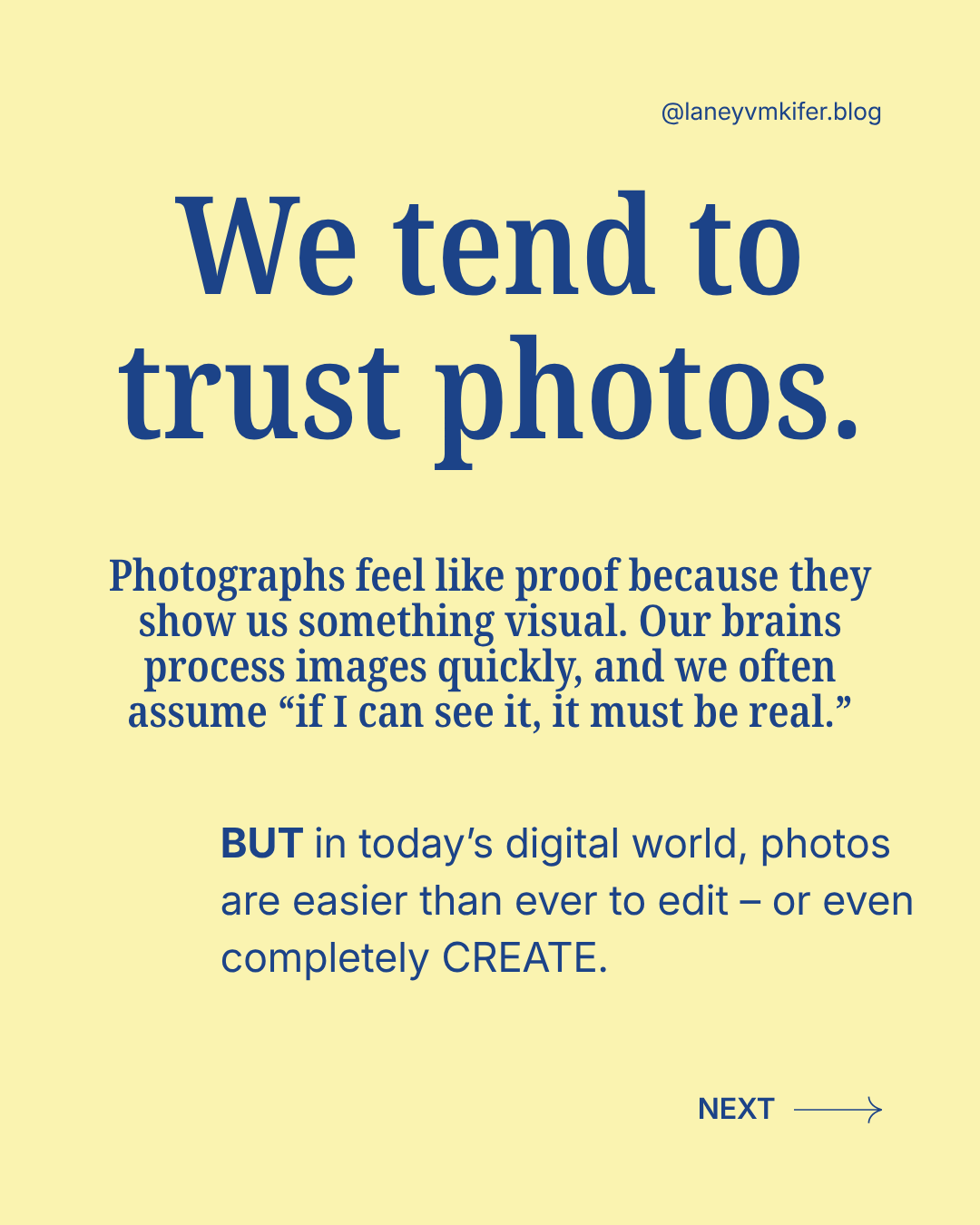
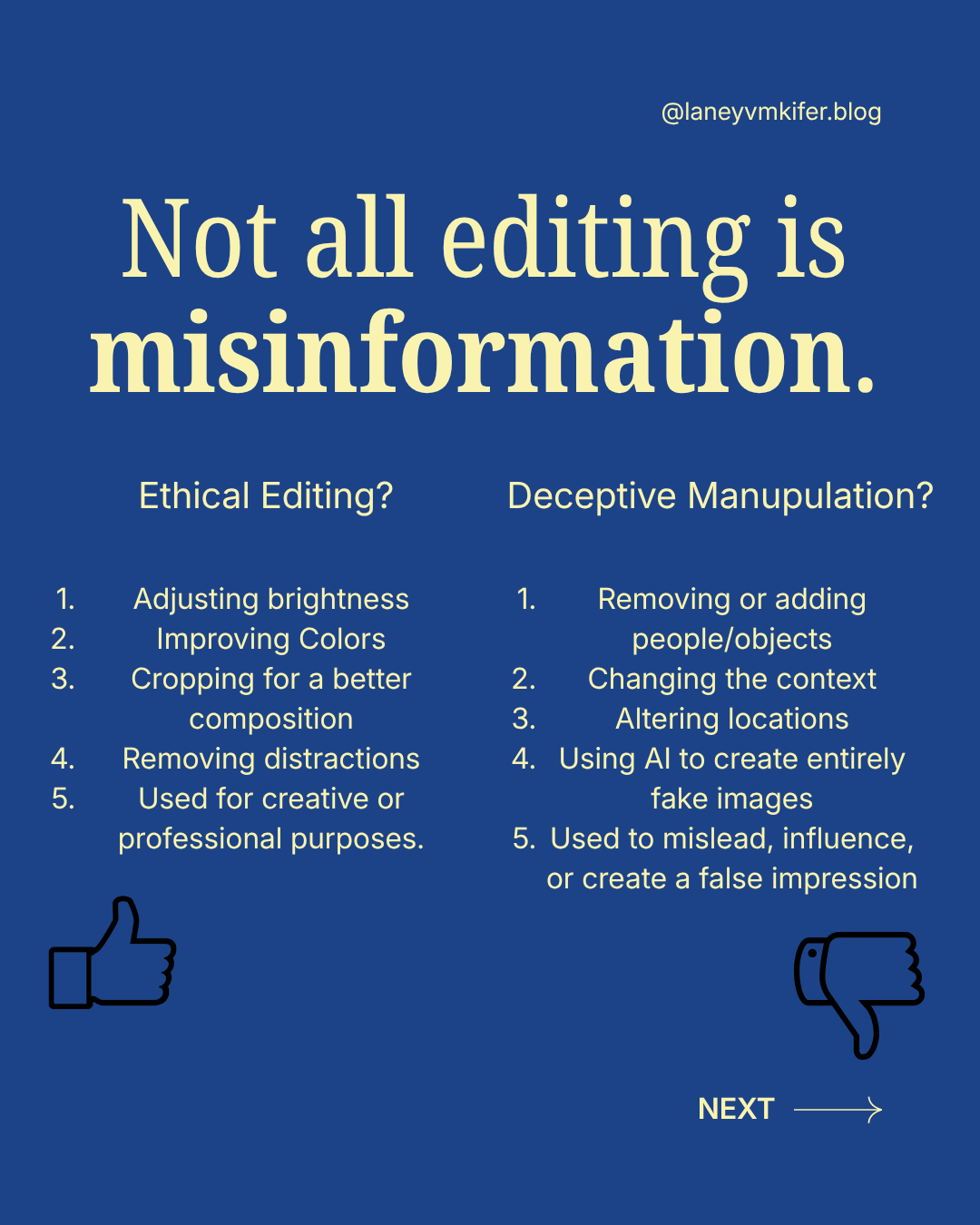
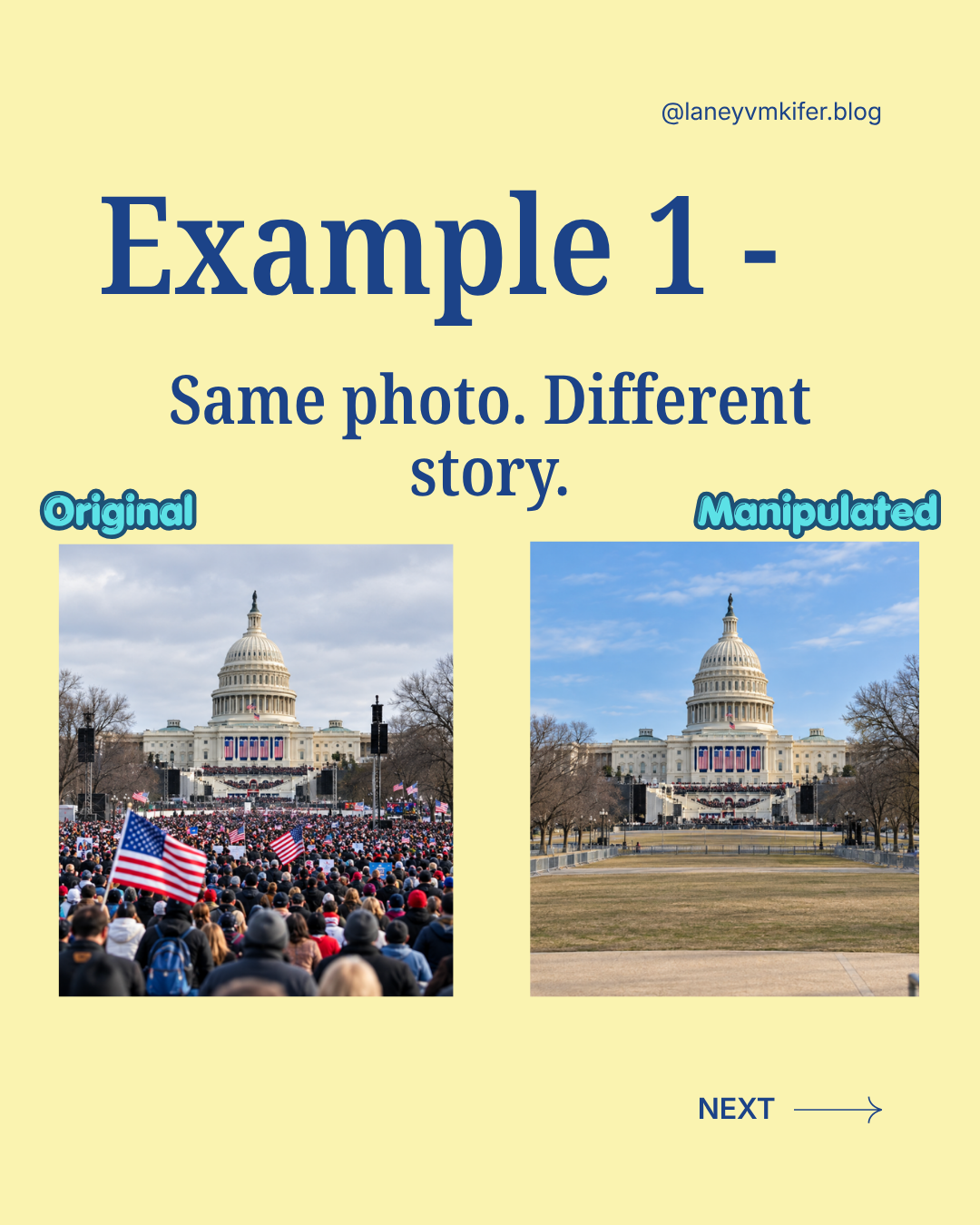
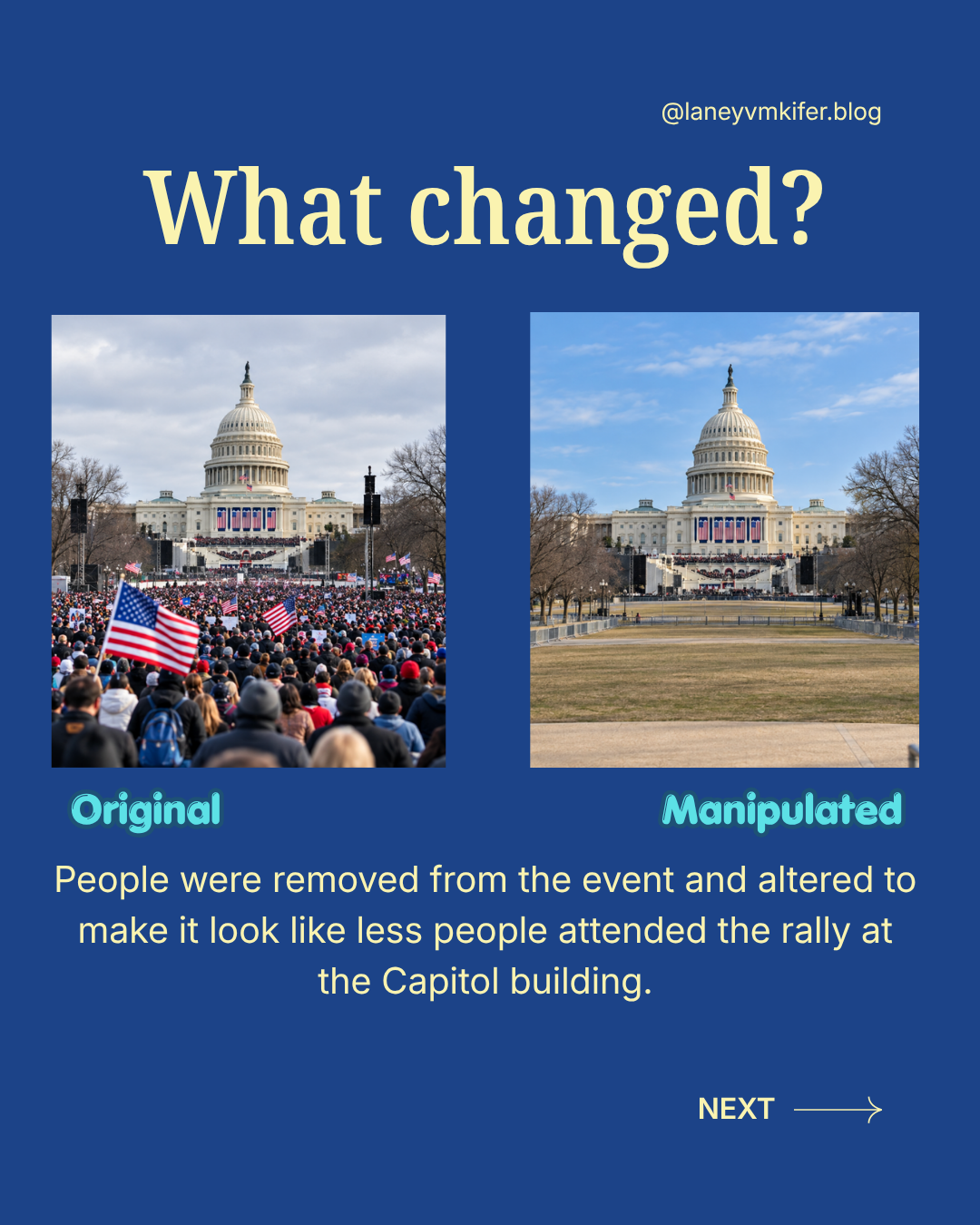
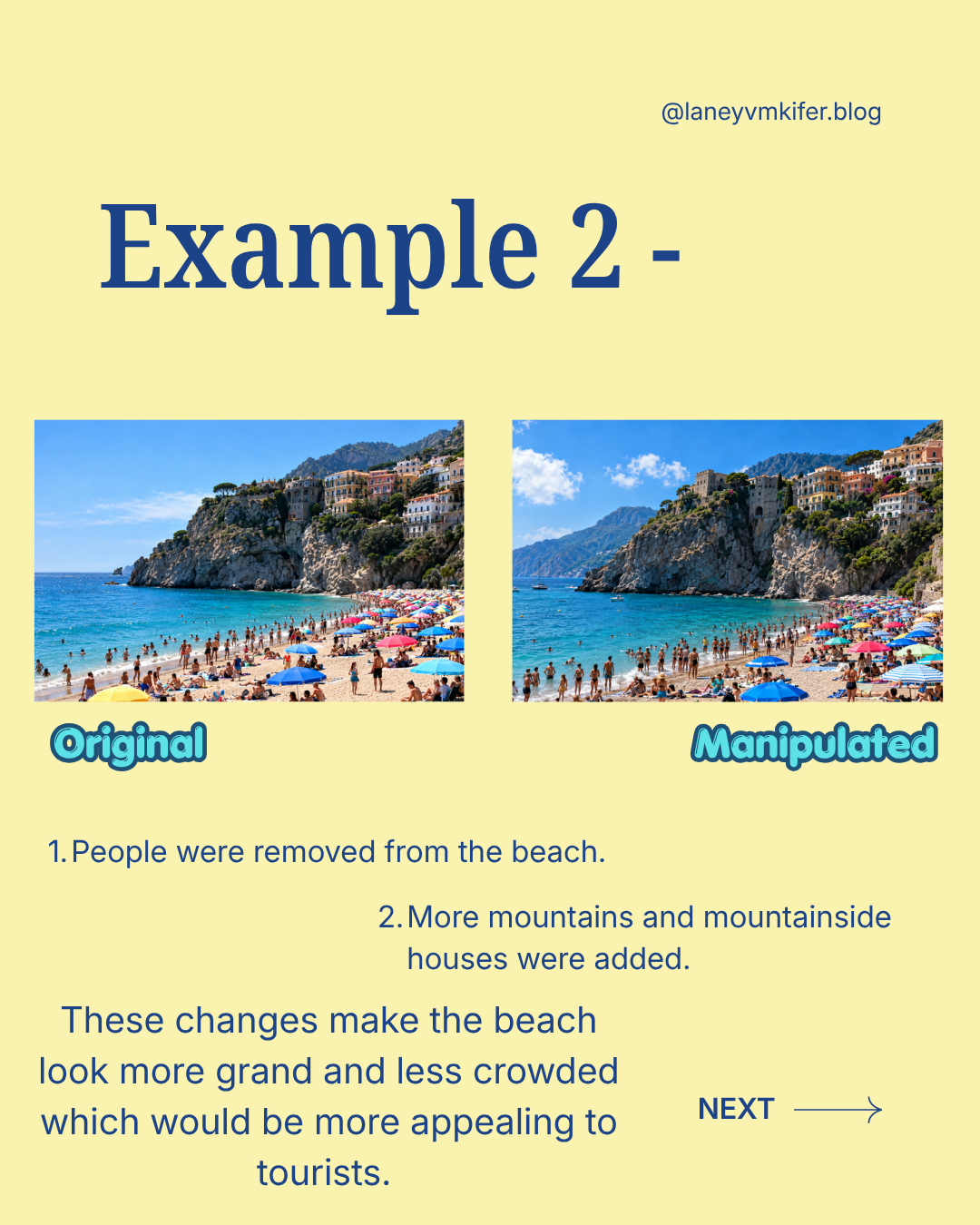
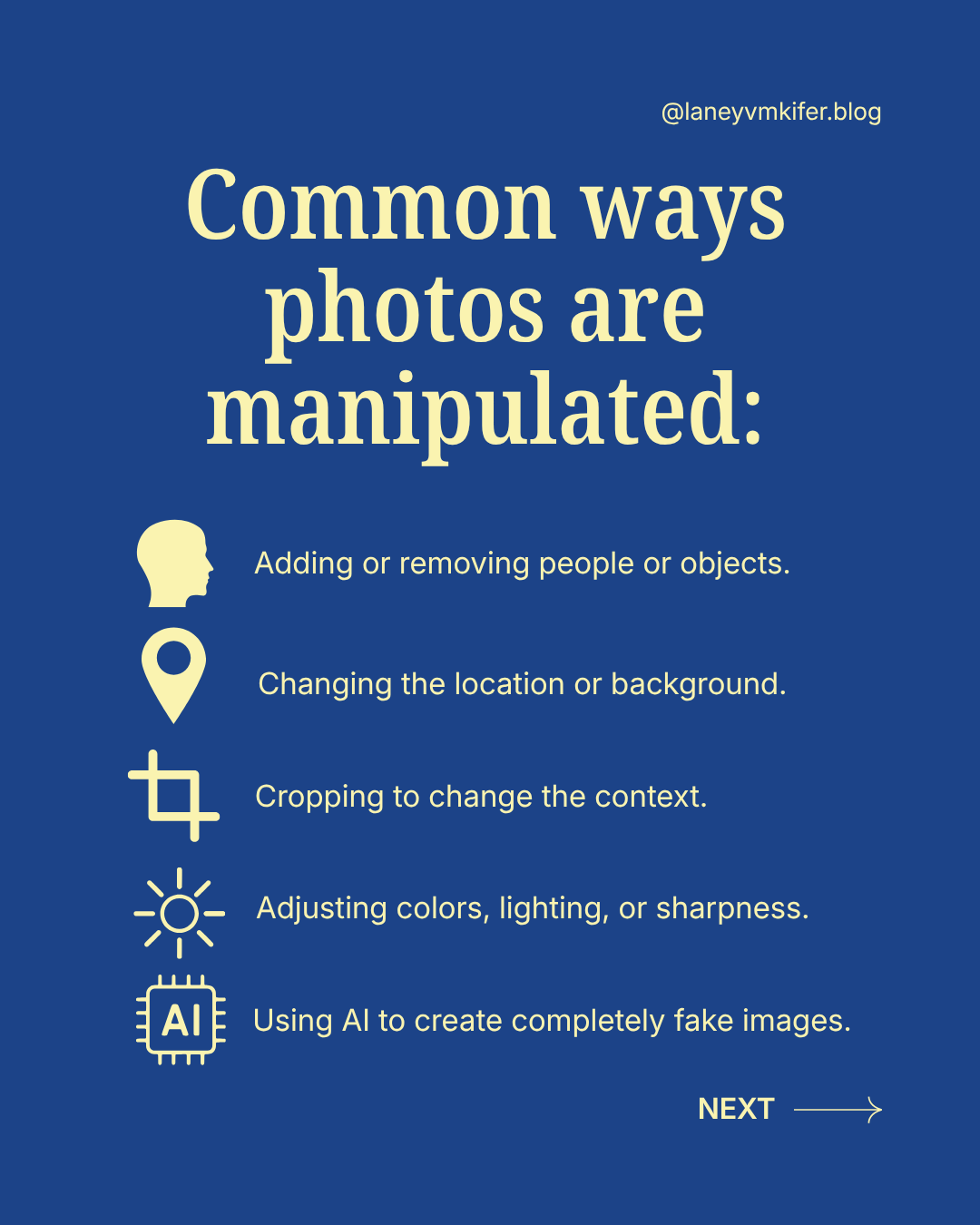
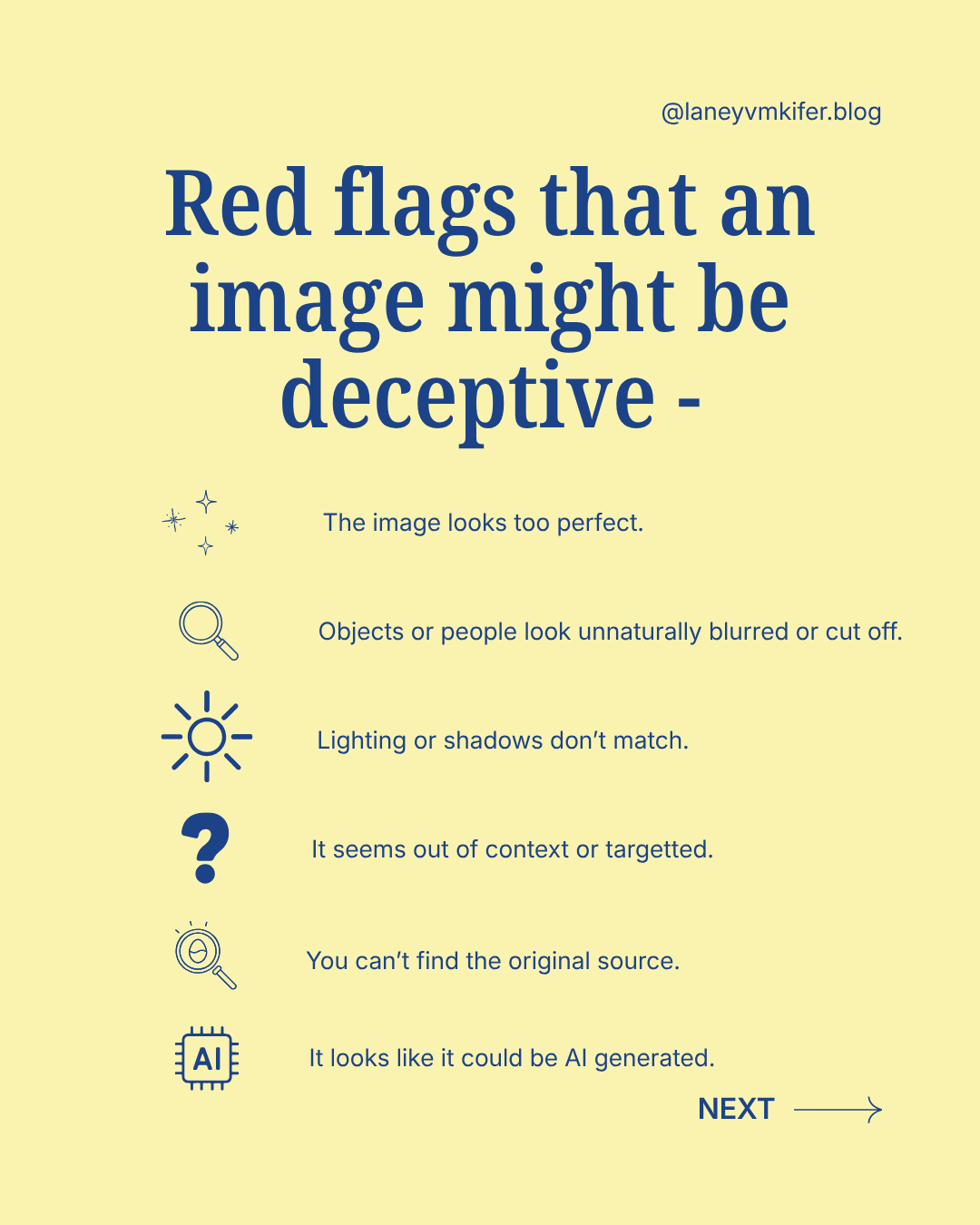
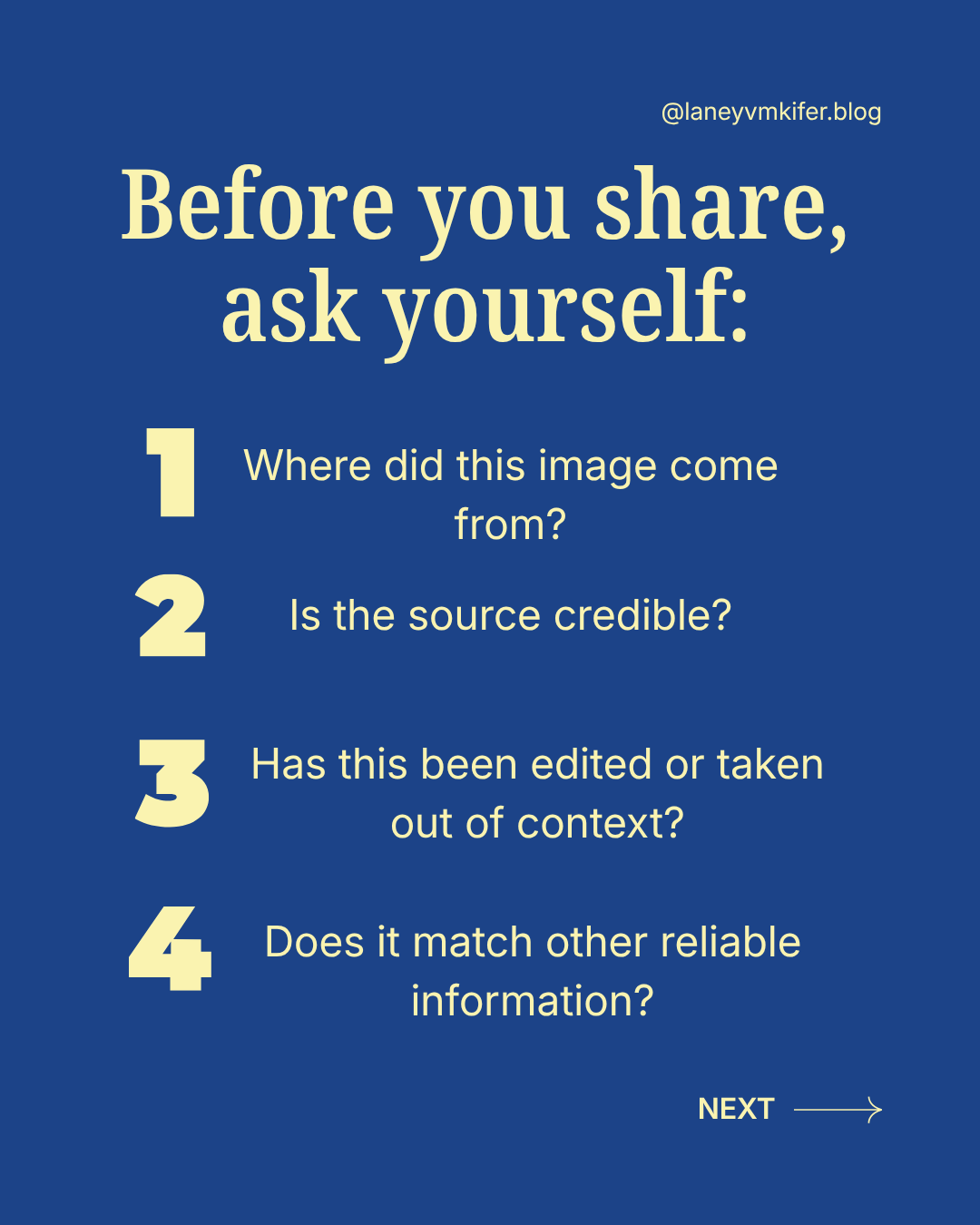
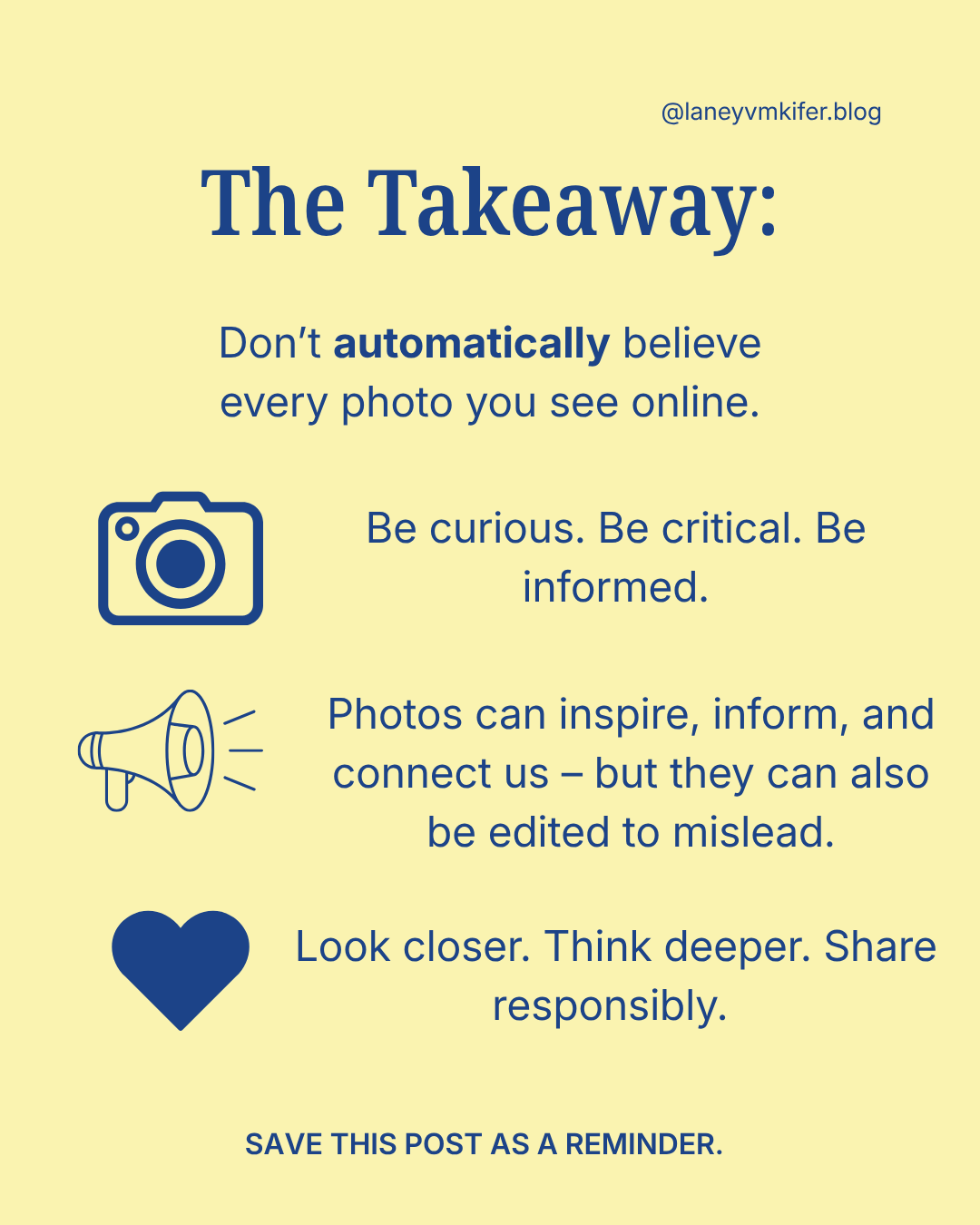
I created an Instagram carousel aimed at teenagers and young adults aged 14–30 who regularly use social media. The goal is to help users recognize manipulated or misleading photographs and think critically before believing or sharing them.
I chose Instagram because it is a highly visual platform where edited and AI-generated images can and DO spread quickly. I used simple but eye-catching colors and kept a consistent design throughout the slides to maintain attention. I also kept the information short and to the point to accommodate shorter attention spans and make the content easy to understand.
The slides explain common types of image manipulation, provide examples, identify red flags, and give users simple questions to ask before sharing an image. The project benefits anyone who regularly encounters visual information online by encouraging them to pause, verify, and share responsibly.
———————————————————————————-
September 18th, 2026
Module 5 Blog Post! Facebook and TikTok: How Social Media Platforms Fight Misinformation
Social media has become a primary way people get news, learn about current events, and share information. Facebook and TikTok illustrate how misinformation can reach diverse audiences through different content formats. Facebook is commonly used to share posts, news articles, and information within communities, while TikTok focuses on short-form videos delivered through personalized recommendations. Although their audiences overlap, comparing these platforms offers an opportunity to examine how social media companies attempt to reduce misinformation and how their policies affect users.
Misinformation is false or inaccurate information shared without necessarily intending to deceive. Disinformation, by contrast, is the deliberate spread of false or misleading information. Both can influence how people understand public health, politics, and current events. Facebook and TikTok have developed policies to address these challenges, but their effectiveness depends on consistent implementation and on users’ ability to recognize unreliable information.
Facebook’s Approach to Misinformation
Facebook is owned by Meta, which has significantly changed its misinformation policies in recent years. In January 2025, Meta announced changes to its fact-checking program, saying it would end its third-party fact-checking program in the United States and transition to a Community Notes model. This system allows users to contribute context to posts they believe may be misleading. According to Meta, notes require agreement among contributors with different perspectives before they are displayed.
This approach marks a shift from relying primarily on independent fact-checking organizations to a community-based system. For example, if a Facebook user shares an inaccurate claim about an election or a public health issue, contributors may create a note explaining the issue and providing supporting information. The note can help other users evaluate the original post without necessarily requiring the content to be removed.
One potential advantage of Community Notes is that it lets users help correct misinformation. It also emphasizes adding context rather than automatically deleting controversial content. However, the system has limitations. Community contributors may not have specialized expertise, and reaching agreement can take time. In a March 2026 decision, Meta’s Oversight Board examined the company’s plans to expand Community Notes, raising concerns about the system’s ability to address misinformation effectively in different environments.
Facebook could improve its approach by combining community contributions with professional fact-checking. Community Notes and independent verification serve different purposes, and using both could provide users with additional context and specialized expertise. The platform should also make the evidence behind corrections easy to access so users can evaluate information independently.
TikTok’s Approach to Misinformation
TikTok addresses misinformation through its Community Guidelines on Integrity and Authenticity, independent fact-checking partnerships, content moderation, and restrictions on recommendations. The platform is also updating its recommendation policies on September 24th, 2026, demonstrating how social media companies continue to adjust their approaches to content distribution. TikTok prohibits misinformation that may cause significant harm. Depending on the type of content and the applicable policy, TikTok may remove the content, restrict its recommendation, or apply other enforcement measures. This distinction matters because content that remains accessible is not necessarily recommended to a broad audience. The company also partners with independent fact-checking organizations to assess content and support its moderation processes.
One way TikTok enforces these policies is by limiting the recommendation of content that violates its guidelines or cannot be verified. For example, during election periods, the platform addresses misleading claims about voting procedures, election results, and voter participation. TikTok also provides resources to help users find reliable civic information.
In March 2026, TikTok reported on its transparency efforts under the EU Code of Conduct on Disinformation. The report details the platform’s efforts to address misleading content and improve platform integrity. However, moderation statistics alone do not establish how effectively TikTok reduces misinformation that remains available or how users respond to it.
TikTok’s approach has advantages because it combines professional fact-checking with automated moderation. Its recommendation system also offers a way to limit the reach of misleading content. However, the speed of short-form video sharing creates challenges. A misleading video can reach a large audience before reviewers assess it, and users may accept a claim because of a creator’s confidence, popularity, or presentation style.
TikTok could improve its policies by providing clearer explanations when it labels or restricts content. It could also expand media literacy resources that teach users how to identify unreliable sources and verify claims before sharing them.
Comparing Facebook and TikTok
Facebook and TikTok use different content formats and distribution systems, which affects how users encounter misinformation. Facebook users may see misleading information through personal posts, groups, and shared articles. TikTok users frequently encounter content through the For You feed, which recommends videos based on user activity and other signals.
These differences matter because misinformation is not only a problem of inaccurate content. The way platforms distribute information can influence how quickly and widely misleading claims spread. A platform’s response should therefore consider both the accuracy of individual posts and the systems that recommend content.
One difference between the platforms is their approach to fact-checking. Facebook’s move toward Community Notes places greater emphasis on community participation, whereas TikTok continues to rely on independent fact-checking partnerships and content moderation. Both approaches have potential benefits, but neither guarantees that misinformation will be identified or corrected before it reaches a large audience.
From my perspective as a social media user, the way information is presented can affect how credible it seems. A video with confident narration, professional editing, or thousands of views may seem trustworthy even when it lacks reliable evidence. This demonstrates why users should evaluate the source of information rather than relying on popularity or presentation alone.
Recommendations for Improvement
Both Facebook and TikTok could strengthen their efforts by increasing transparency, responding more quickly, and promoting media literacy education.
First, platforms should make the evidence behind misinformation labels more accessible. Users should be able to understand why content was flagged and review reliable sources that support a correction. This would encourage people to evaluate information independently rather than simply accepting a platform’s decision.
Second, platforms should improve their response to emerging misinformation by providing verified sources and clearly labeling unconfirmed information. The Vanity Fair report on TikTok’s moderator error explains that automated systems flagged the livestream within minutes, but a moderation error delayed its removal. This incident demonstrates the need for faster moderation, reliable escalation procedures, and safeguards to ensure harmful content is addressed promptly.
Third, Facebook and TikTok should continue investing in media literacy education. Teaching users to identify manipulated content, evaluate sources, and distinguish opinions from factual claims can help address the root causes of misinformation. These skills are useful regardless of the social media platform a person uses.
Finally, both companies should publish more detailed information on the effectiveness of their policies. Reporting on response times, moderation errors, appeals, and the reach of misleading content would enable researchers and the public to assess whether these systems are achieving their intended goals.
Conclusion
Facebook and TikTok demonstrate different approaches to addressing misinformation. Facebook’s transition toward Community Notes emphasizes community participation, while TikTok combines independent fact-checking partnerships, moderation, and restrictions on content distribution.
Although these policies can reduce the spread of some misinformation, they cannot eliminate it entirely. Both platforms must continue improving their systems while users develop stronger media literacy skills.
Ultimately, addressing misinformation requires cooperation among technology companies, independent organizations, and social media users. Greater transparency, reliable evidence, and education can help users make more informed decisions about the information they encounter online. Social media platforms have a responsibility to reduce harmful misinformation, but users also need the skills to question and verify what they see.
———————————————————————————-
September 12th, 2026
Module 4 Blog Post! Claim Analysis!
How I Verified a Viral Photo Claim
I recently came across a viral image claiming to compare a “Getty photo” of President Donald Trump with a version of the same photo supposedly edited by the White House. The post’s caption read, “Getty photo vs. what the White House releases.” At first glance, the claim seemed plausible because both Getty Images and the White House are well-known sources of political photographs. However, it also raised red flags. The comparison was presented without identifying the original photograph, photographer, or specific White House publication. Because images can be edited easily, I verified the claim rather than assume the comparison was legitimate.
Step 1: Stop and identify exactly what is being claimed.
The first step in the SIFT method is to pause before you immediately believe or share something. In this case, the claim wasn’t simply that Trump’s appearance looked different in two photographs. It was specifically that one image was a genuine Getty photograph, while the other was an image the White House edited and released. That distinction is important because the sources supposedly responsible for the images are part of the claim itself.
Screenshot #1: Viral social media post
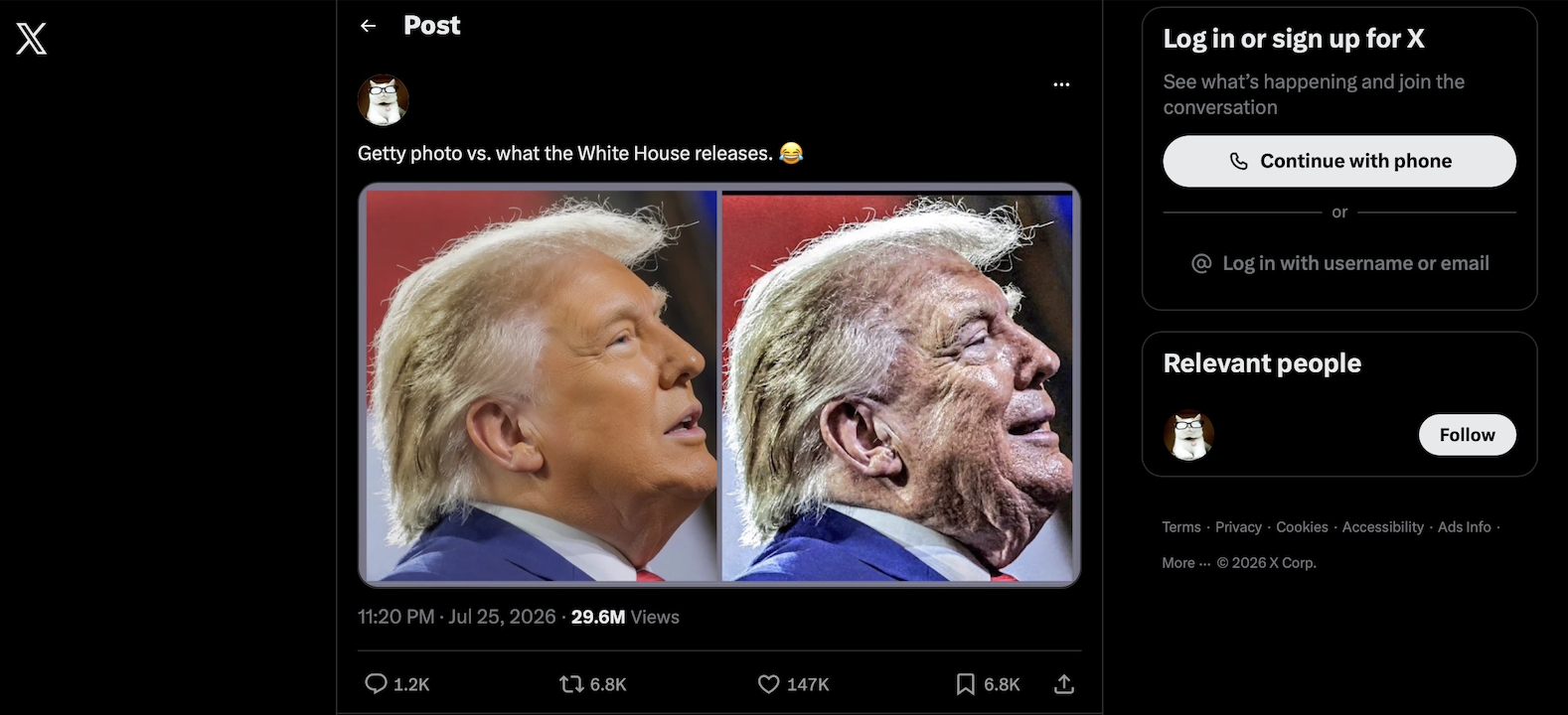
The post is a good example of why an image deserves verification. It provides a strong conclusion but very little information about where either image originally came from.
Step 2: Investigate the claim outside of the original post.
Instead of continuing to examine the social media post itself, I searched for the claim using different keywords. I used terms such as “Trump Getty photo White House releases edited image.” This is an example of lateral reading because I left the original source and looked elsewhere to see whether independent sources had investigated the claim.
Screenshot #2: Search results
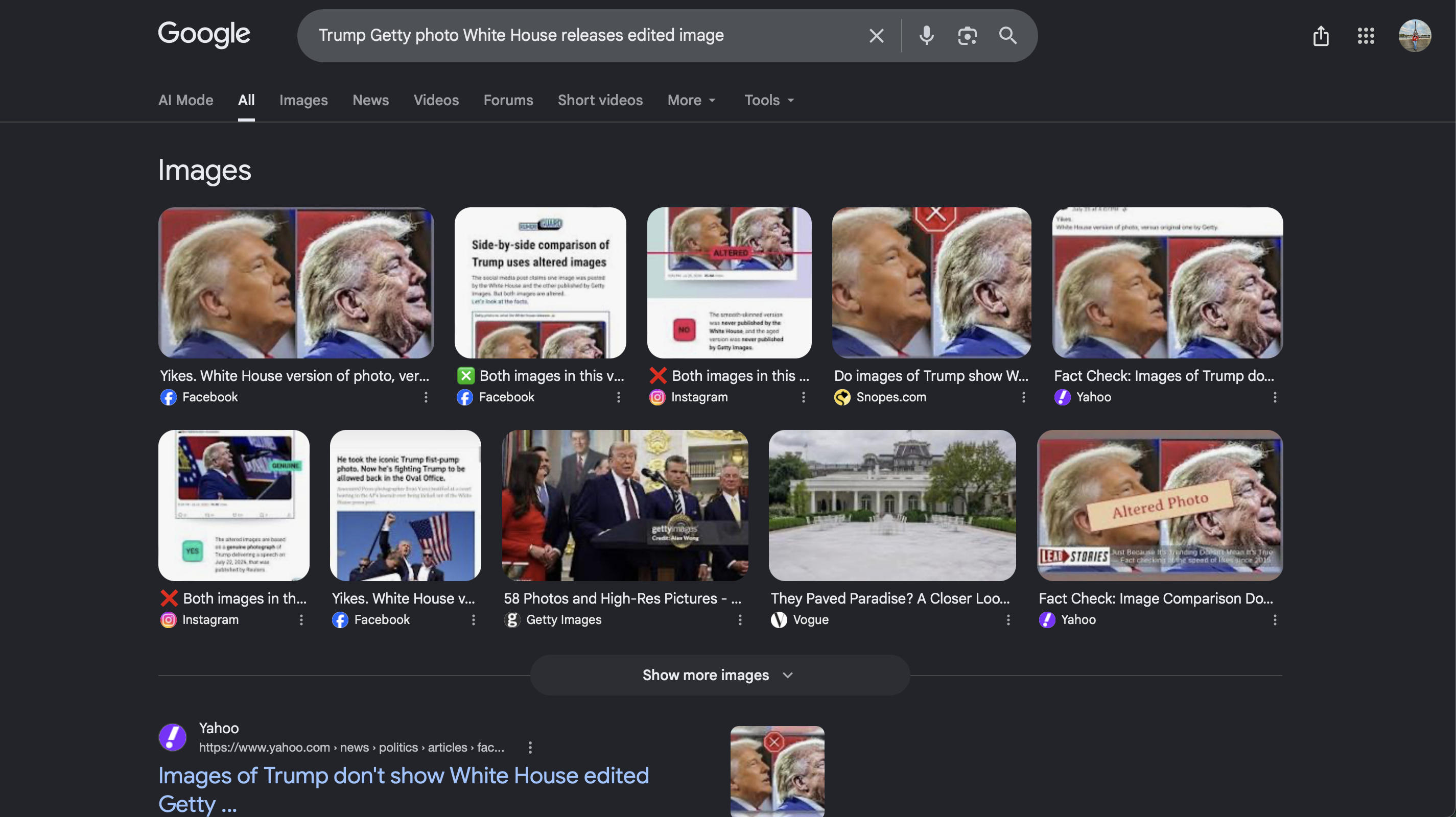
The search results led me to a Lead Stories fact-check that specifically addressed the viral comparison. Lead Stories reported that both images were edited and that neither image could be attributed to Getty Images or the White House.
Step 3: Find a source that investigated the claim.The Lead Stories fact check provided a useful starting point because it did not simply label the post “fake.” It explained how the investigators reached their conclusion. According to the fact check, the supposed Getty photograph was an edited version of an authentic Reuters photograph taken at Trump’s July 22, 2026, event in Marietta, Georgia. The image claiming to be the White House version was also an edited version of that same Reuters photograph.
Screenshot #3: Lead Stories fact-check
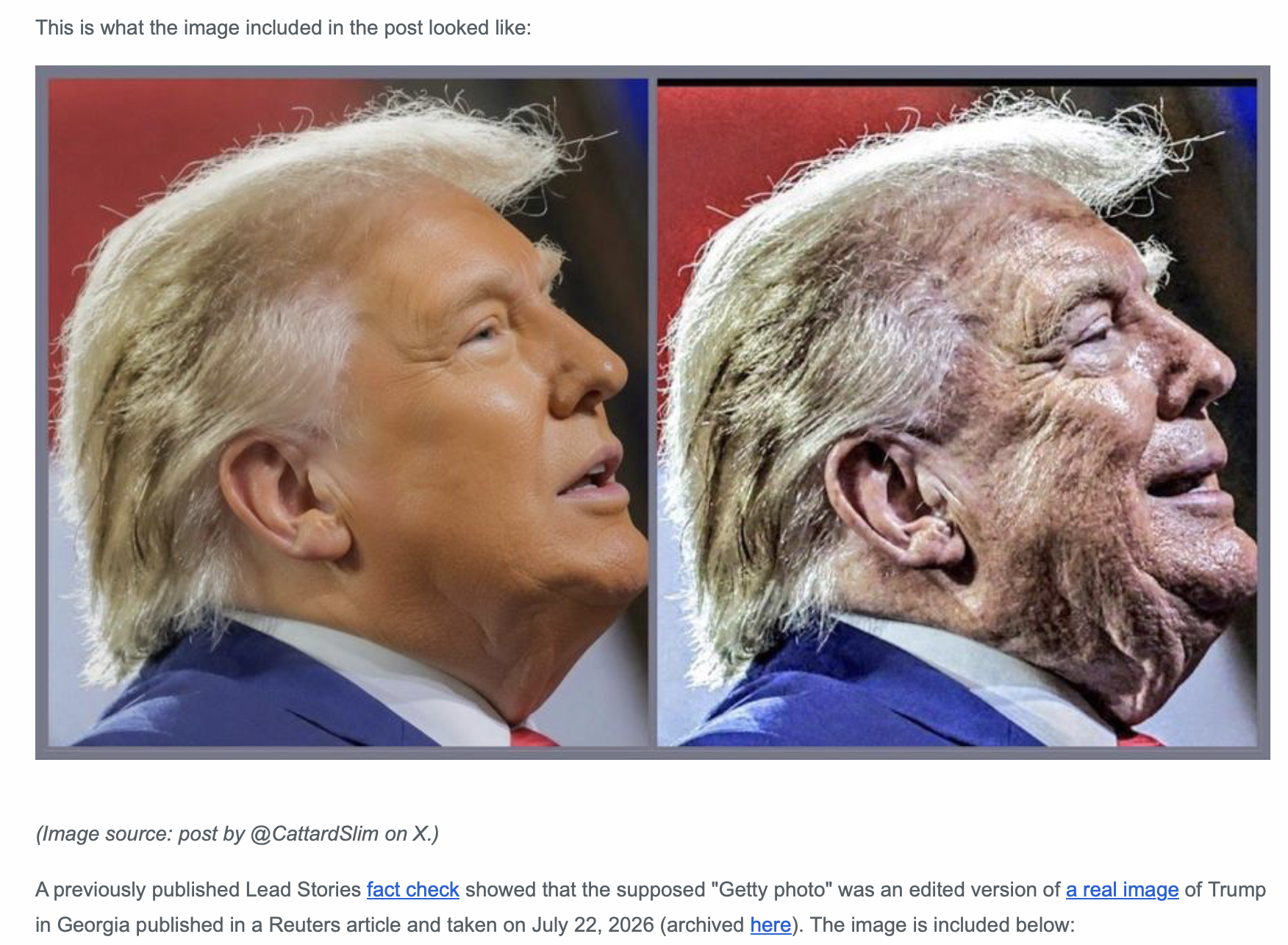
This mattered because it gave me another source to investigate, rather than simply accepting one fact-checker’s conclusion.
Step 4: Trace the photograph back to its original source.The next step was to follow the evidence back to the original photograph. Lead Stories linked to the Reuters photograph and identified it as the authentic image from Trump’s Georgia event. This is an important part of verification because tracing an image to its original source is more reliable than simply judging whether it “looks real.”
Screenshot #4: Original Reuters photograph
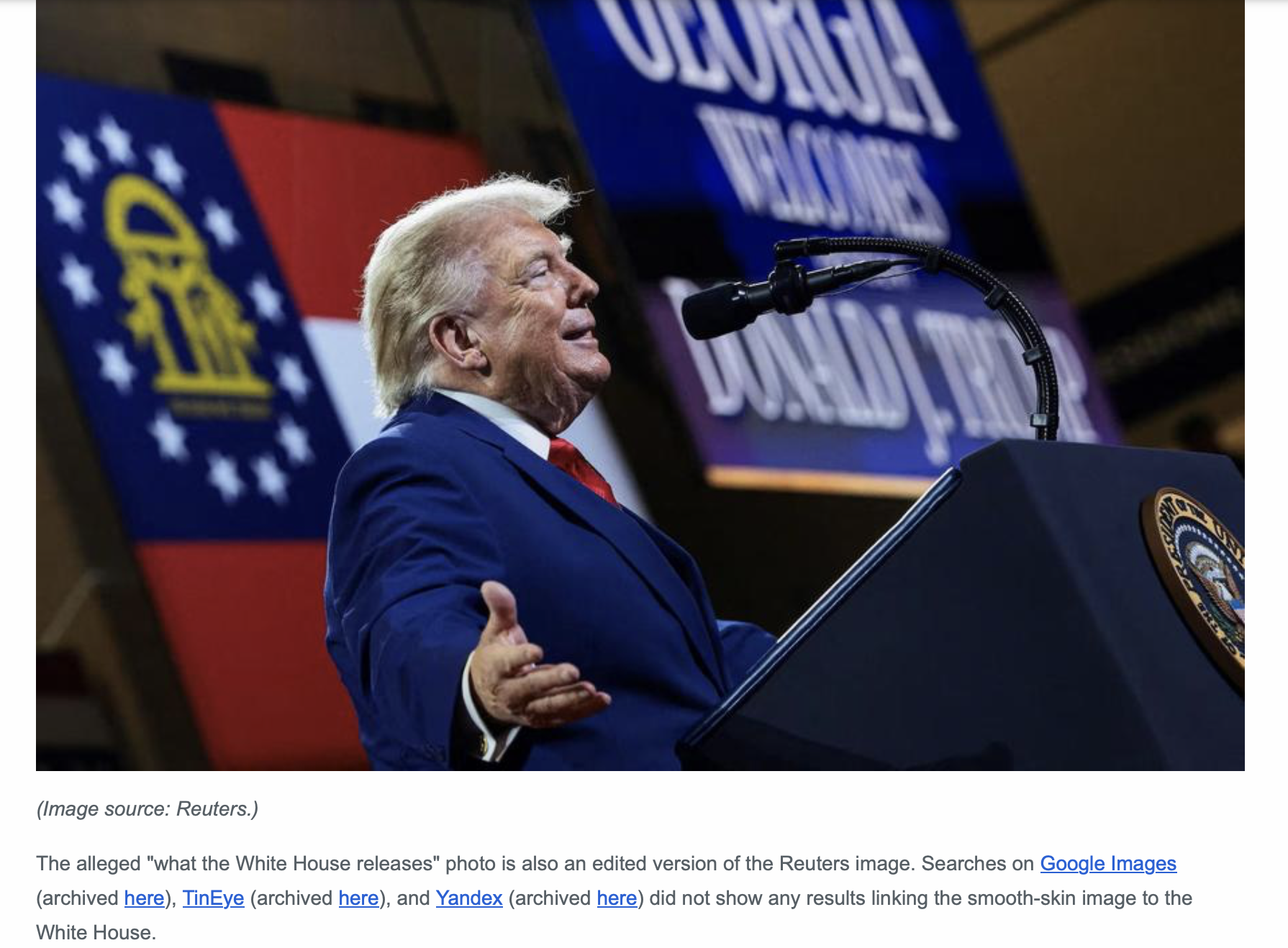
Comparing the original photograph with the viral versions makes it clear that the images being circulated online were altered. The original provides a reference point that the social media post did not.
Step 5: Check the source that was supposedly responsible for the image.Because the viral post specifically claimed that one version was released by the White House, I also checked the White House’s official website. The White House’s official gallery documents Trump’s July 22 event at Wheeler High School in Marietta, Georgia, and includes photographs credited to official White House photographer Molly Riley.
Screenshot #5: White House gallery
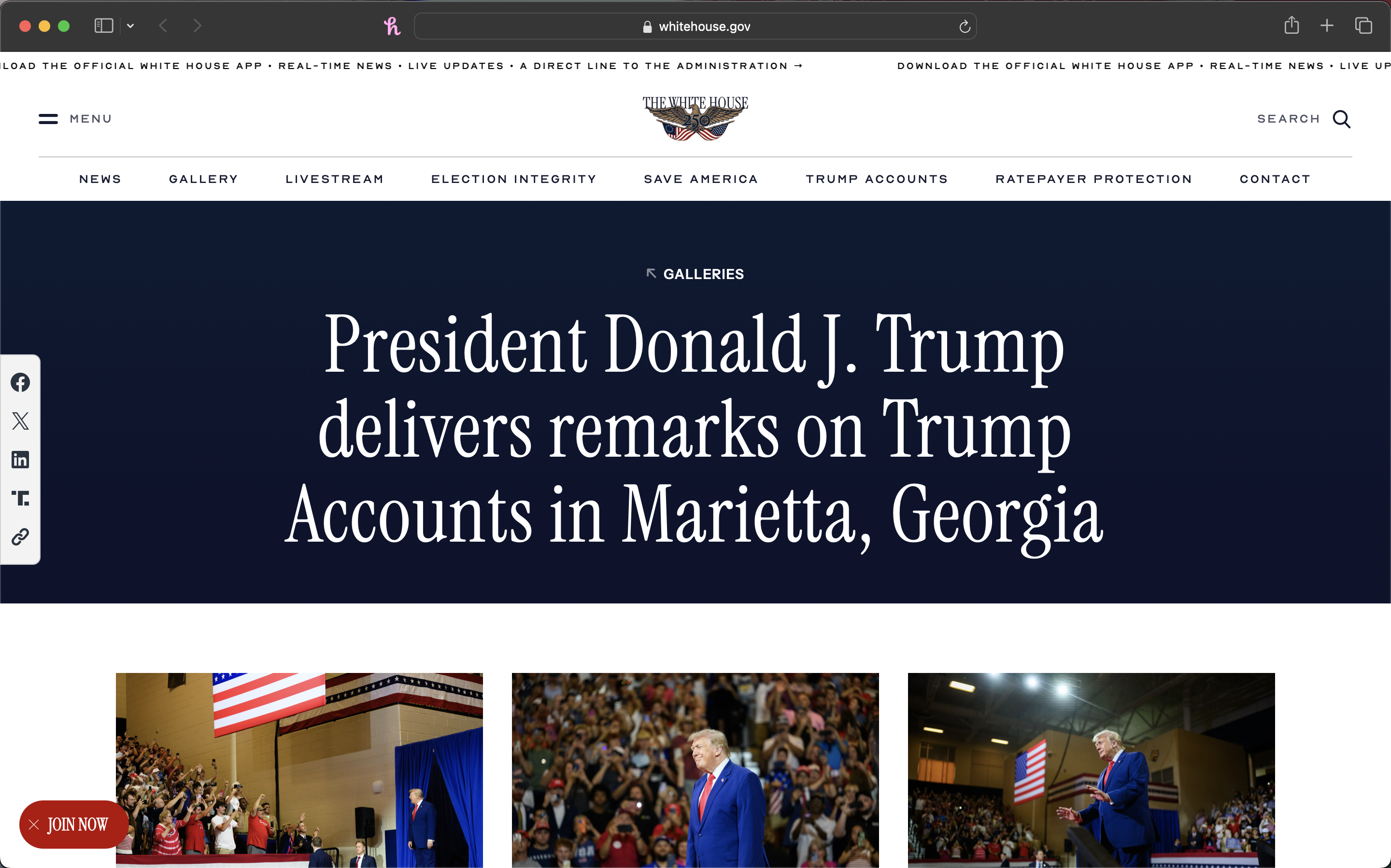
Lead Stories also reported that it checked the White House’s gallery and found that neither of the two viral images matched the photographs published there. This matters because the claim relied on the White House’s authority, but its own gallery did not support it. White House Gallery Link
Step 6: Compare the evidence.After looking at the viral post, independent fact-checking, the original Reuters photograph, and the official White House gallery, the evidence points in the same direction. The viral comparison did not show an authentic Getty photograph next to a White House-edited photograph. Instead, both images were manipulated versions of an authentic Reuters photograph.
Conclusion
My final assessment is that the claim is false and misleading. The original photograph was real, but the way it was presented in the viral post was not. This is exactly why simply asking whether a photograph “looks real” is not enough. A manipulated image can begin with an authentic photograph and still be used to create a completely misleading claim.
This example also shows why lateral reading and the SIFT method are useful. I didn’t need to be a photo-editing expert to evaluate the claim. I simply stopped before accepting it, searched for information outside of the original post, found independent reporting, and traced the image back to its original source. Taking a few extra minutes can prevent us from accidentally believing or sharing misinformation. In this case, the most convincing evidence wasn’t how the viral images looked, but where they actually came from.
———————————————————————————-
September 5th, 2026
Module 3 Blog Post! Learning to Spot Misinformation: RumorGuard and Bad NEWS!
With misinformation spreading quickly across social media, it can be difficult to determine which information is trustworthy. Two tools that help teach people how to recognize misinformation are the News Literacy Project’s RumorGuard and the interactive game Bad News. After using both, I found they take very different approaches, but both make misinformation easier to understand by letting users actively practice recognizing it.
RumorGuard is an educational tool from the News Literacy Project that uses real examples of viral rumors to teach people how to evaluate information. Rather than simply telling users whether something is true or false, RumorGuard explains why a claim should or should not be trusted. Its main strategy is the “5 Factors”: Authenticity, Source, Evidence, Context, and Reasoning. You can use these factors to evaluate almost any claim you encounter online.
I found this approach useful because it offers a simple checklist to use before automatically believing or sharing information. For example, asking where a claim came from and whether evidence actually supports it can prevent someone from accepting information simply because it looks convincing. RumorGuard also emphasizes that real information can be misleading when it is taken out of context or manipulated.
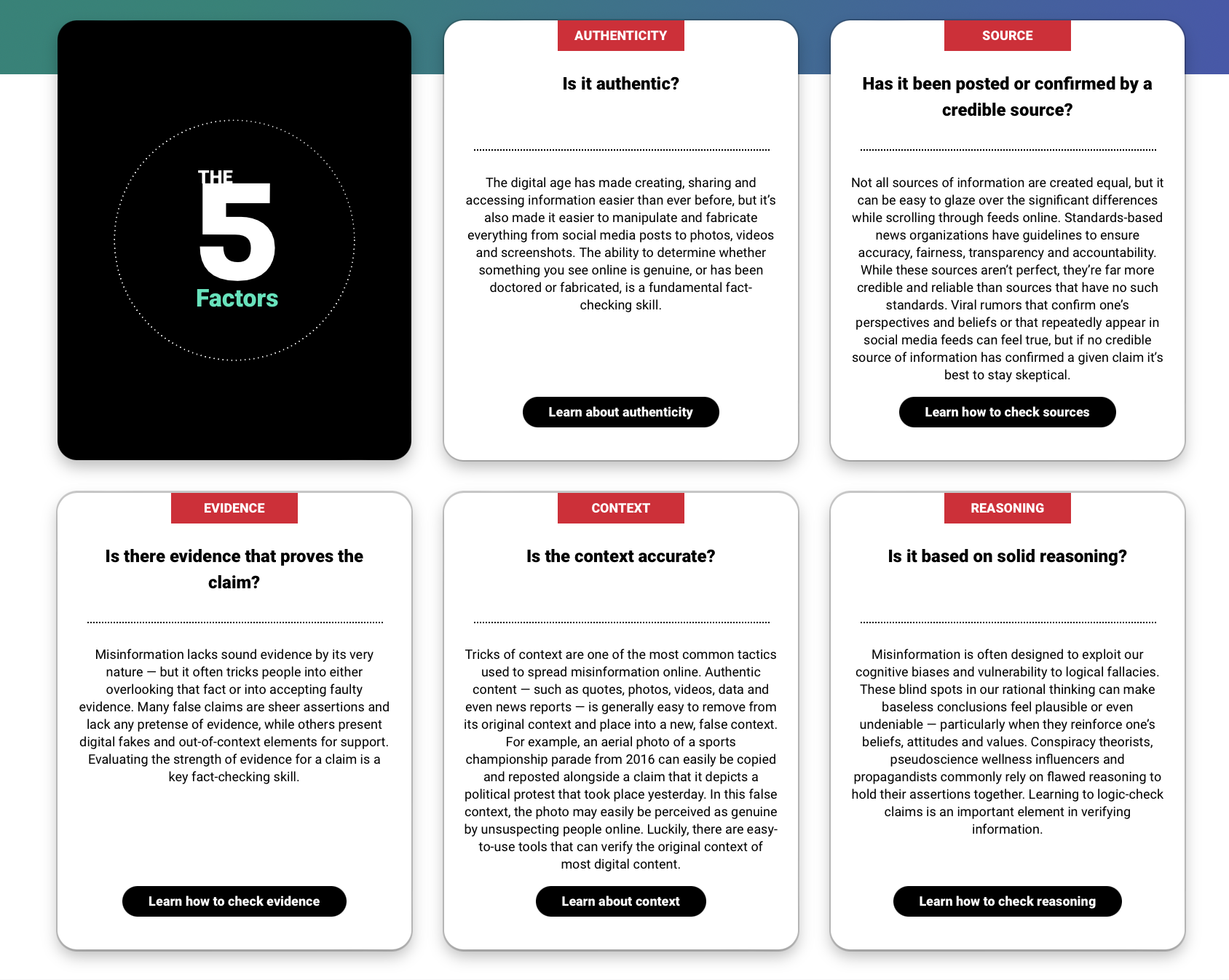
Overall, I think RumorGuard is effective because it teaches a process rather than just providing answers. The biggest limitation is that users still have to apply those skills independently when they encounter misinformation elsewhere. However, the five factors are simple enough to remember and apply in everyday situations.
Bad News takes a completely different approach. Instead of being taught to identify misinformation from the outside, players create it. Players make decisions to gain followers and credibility while learning common misinformation techniques. These include using emotional language, impersonating accounts, spreading conspiracy theories, polarizing audiences, trolling, and deflecting blame. While playing, I unlocked techniques such as emotion and impersonation, and the game showed how tactics like fake followers and emotional content can make misinformation more effective. This made the techniques feel more realistic because I used them rather than just reading definitions.
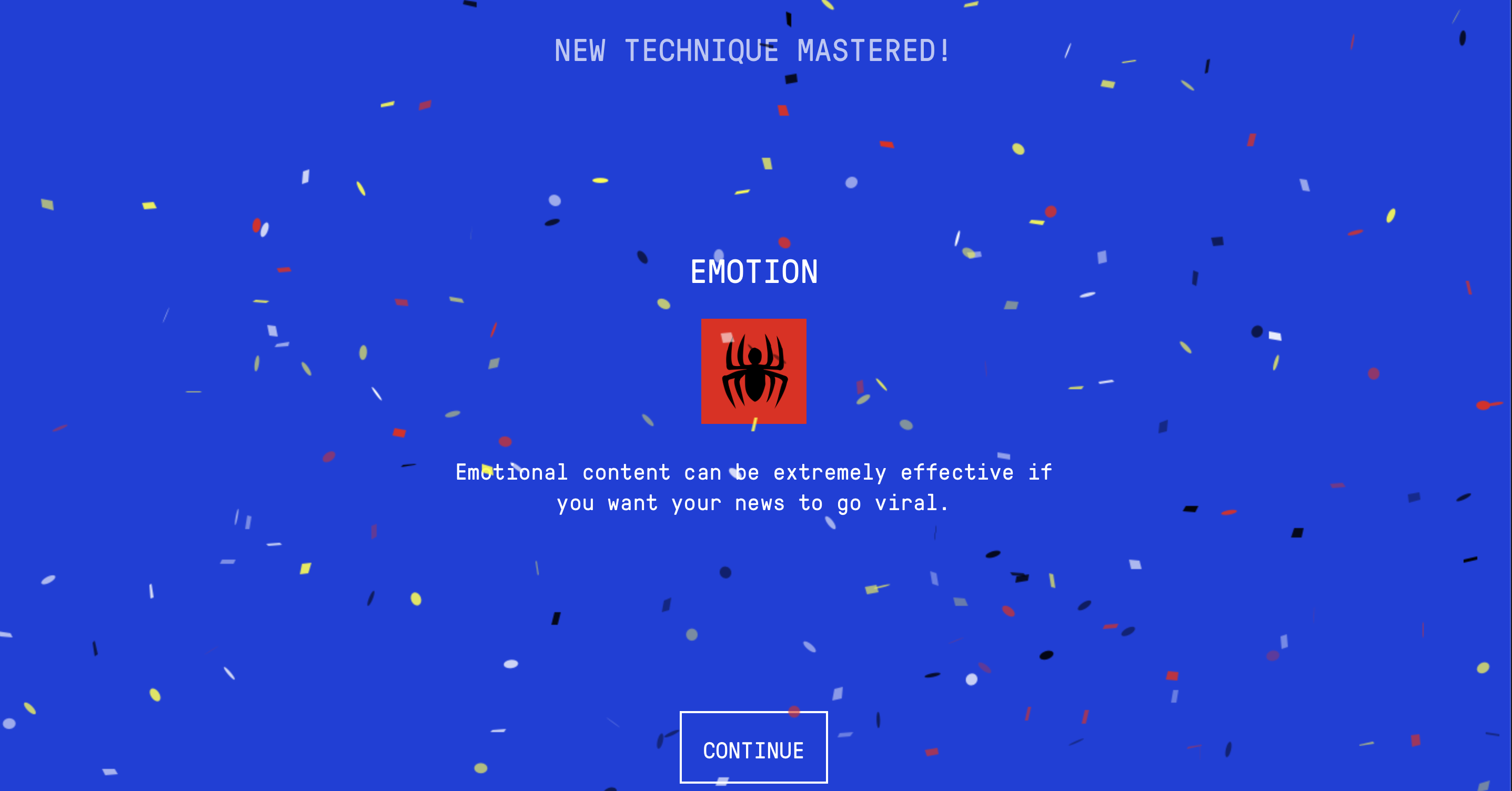
Research also supports using games for media literacy. A study of an online educational game found that playing it improved participants’ ability to discern information, though it did not necessarily make them more skeptical of everything they saw online. This is important because the goal should not be to make people distrust all information, but to help them evaluate it more carefully.
I think educational games and interactive tools can be more effective than simply reading about misinformation because they require active participation. RumorGuard teaches a practical evaluation process, while Bad News lets users experience how manipulation works from the perspective of someone spreading it. Neither tool can prevent misinformation on its own, but both provide skills that can be applied beyond the activity. Ultimately, learning how misinformation works is most useful when people carry those skills with them the next time they see something questionable online.
Here is my final follower count! I definitely started off the game on the safer side and then stopped questioning things for REAL and played along.

———————————–
News Literacy Project. “Evaluate Credibility Using the RumorGuard 5 Factors.” October 18, 2022. https://newslit.org/news-and-research/rumorguard-5-factors/
Roozenbeek, Jon, and Sander van der Linden. “Fake News Game Confers Psychological Resistance against Online Misinformation.” Humanities and Social Sciences Communications 5, no. 1 (2019): 65. https://www.nature.com/articles/s41599-019-0279-9
Yang, Soeun, Jae Woo Lee, Hyoung-Jee Kim, Minji Kang, EunRyung Chong, and Eun-mee Kim. “Can an Online Educational Game Contribute to Developing Information Literate Citizens?” Computers & Education 161 (2021): 104057. https://www.sciencedirect.com/science/article/abs/pii/S0360131520302554\
———————————————————————————-
August 24th, 2026
Module 2 Blog Post!
For this assignment, I tracked the media I encountered over a 24-hour period, paying particular attention to content that seemed questionable or difficult to verify. Most of my media consumption was on Instagram, where I regularly scroll through reels and posts. I noticed that much of the content I saw was entertainment, celebrity news, and short videos, but several posts made claims I immediately questioned.
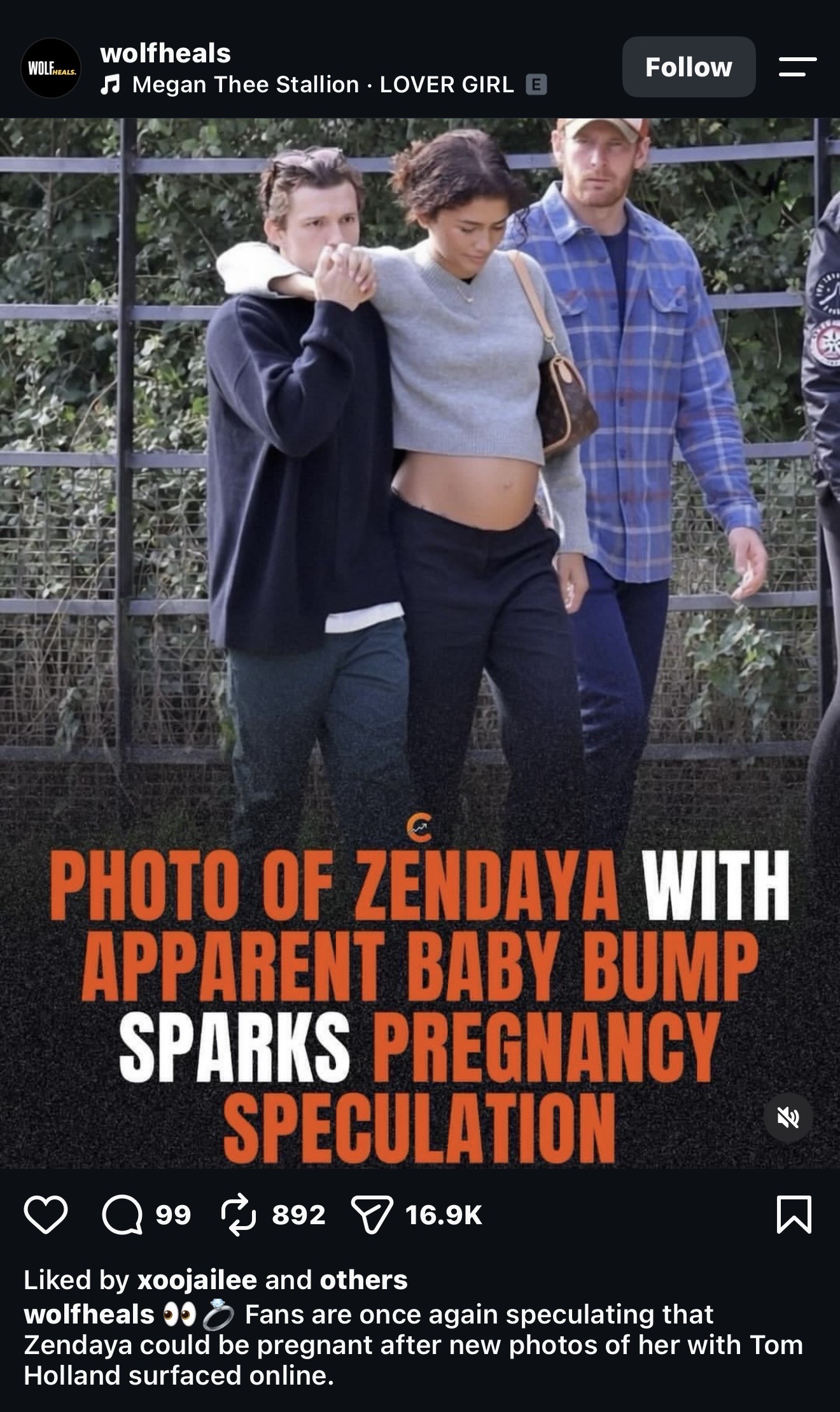
9:15 a.m.: I checked Instagram after waking up. I scrolled through Reels and saw the usual mix of lifestyle content, celebrities, funny videos, and random posts. One of the first questionable posts I came across was about Zendaya and Tom Holland. It claimed that Zendaya had an apparent “baby bump” and that the couple was expecting a child. The post had thousands of likes and shares, which initially made the claim seem more believable. However, it did not provide a reliable source confirming the pregnancy.
11:15 a.m.: I continued scrolling through Instagram and came across a video of a golfer playing at Las Colinas in Arizona. The video showed the golfer attempting a shot on a par-three hole. Nothing particularly questionable about the post, but I included it to illustrate how quickly I move between ordinary content and posts that make serious claims about real people
.

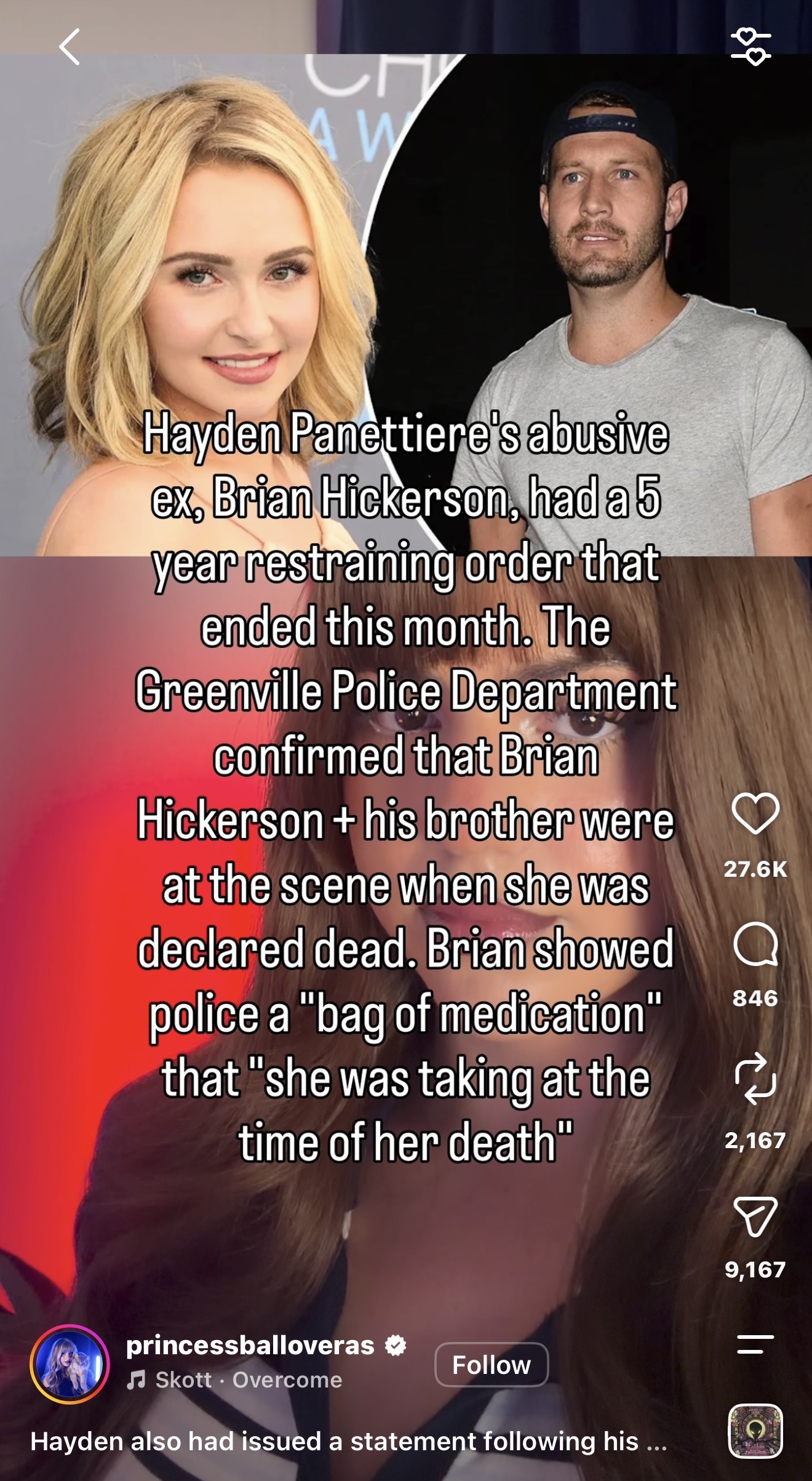
12:00 p.m.: I came across another Instagram post about Hayden Panettiere and Brian Hickerson. The post claimed that Hickerson’s five-year restraining order had ended and that he and his brother were at the scene when Panettiere died. It also stated that he showed police a bag of medication Panettiere had been taking. Because the post involved a recent death and made several serious claims, I considered it questionable and decided it needed fact-checking rather than simply believing or sharing.
After reviewing current reporting, I found that some of the information in the post was based on real events. Hickerson had previously been convicted of domestic violence-related offenses involving Panettiere, and a judge denied his request to reduce or expunge those convictions shortly before her death. Reporting also confirms that Hickerson and his brother were present when Panettiere died and that police found no signs of trauma or foul play. However, the cause of death was still under investigation, so social media posts that imply a specific cause of death or blame Hickerson go beyond what has been established.
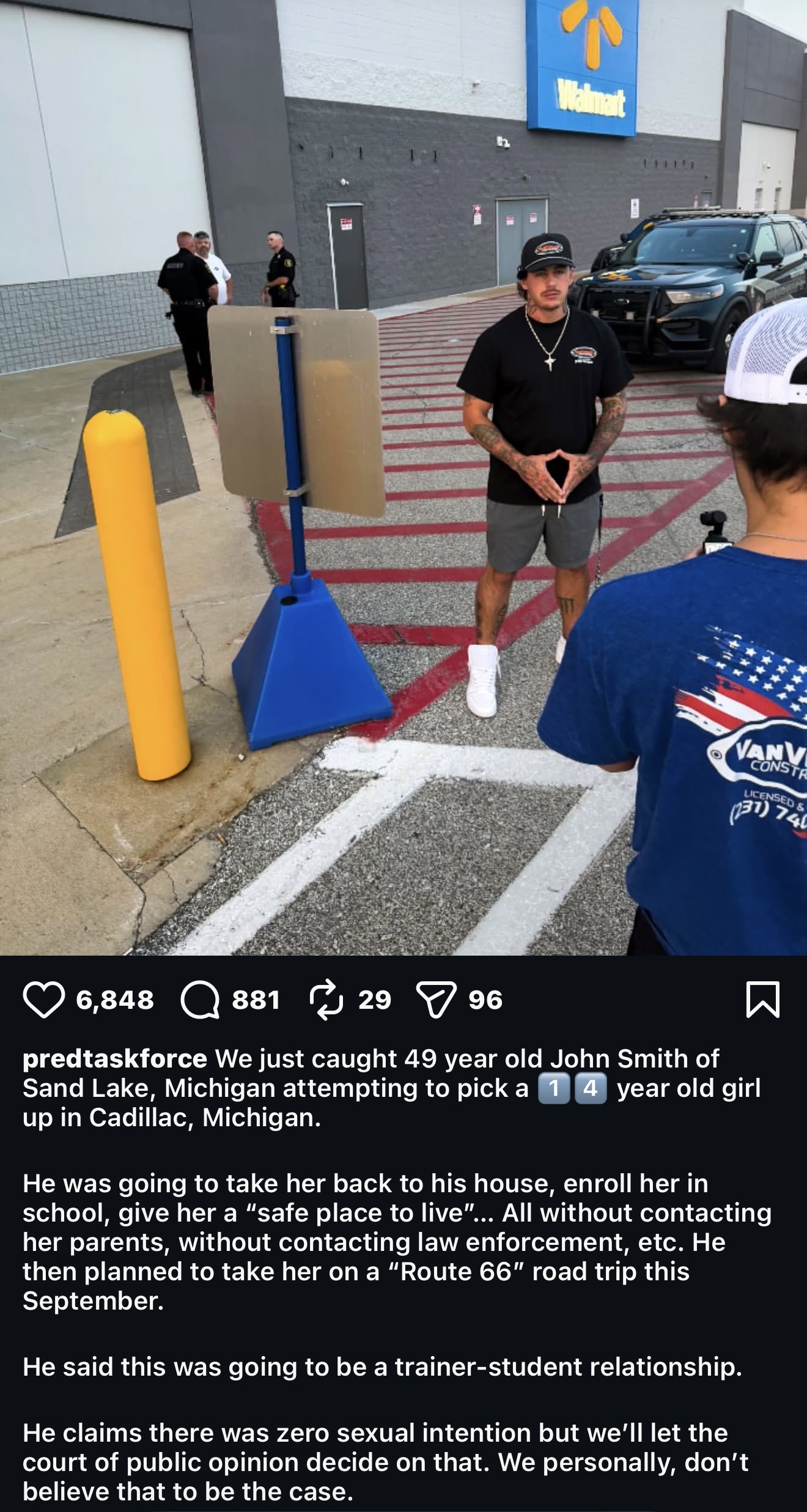
3:00 p.m.: I saw a post from a crime-related Instagram account claiming that a 49-year-old man named John Smith from Sand Lake, Michigan, had been caught attempting to pick up a 14-year-old girl. The post said he planned to take her home, enroll her in school, and take her on a Route 66 road trip. It also included a statement that the man claimed the relationship was only a “trainer-student relationship.” This immediately stood out to me because the account was making extremely serious accusations while encouraging people to rely on its version of events.
I found the same claim posted by the Predatory Task Force account on social media, but I could not find sufficient independent reporting or official documentation to confirm all the details. Because I could not independently verify the allegations, I would not treat the Instagram post as established fact. This was probably the clearest example I saw of why the number of likes or comments on a post should not determine whether I believe it.
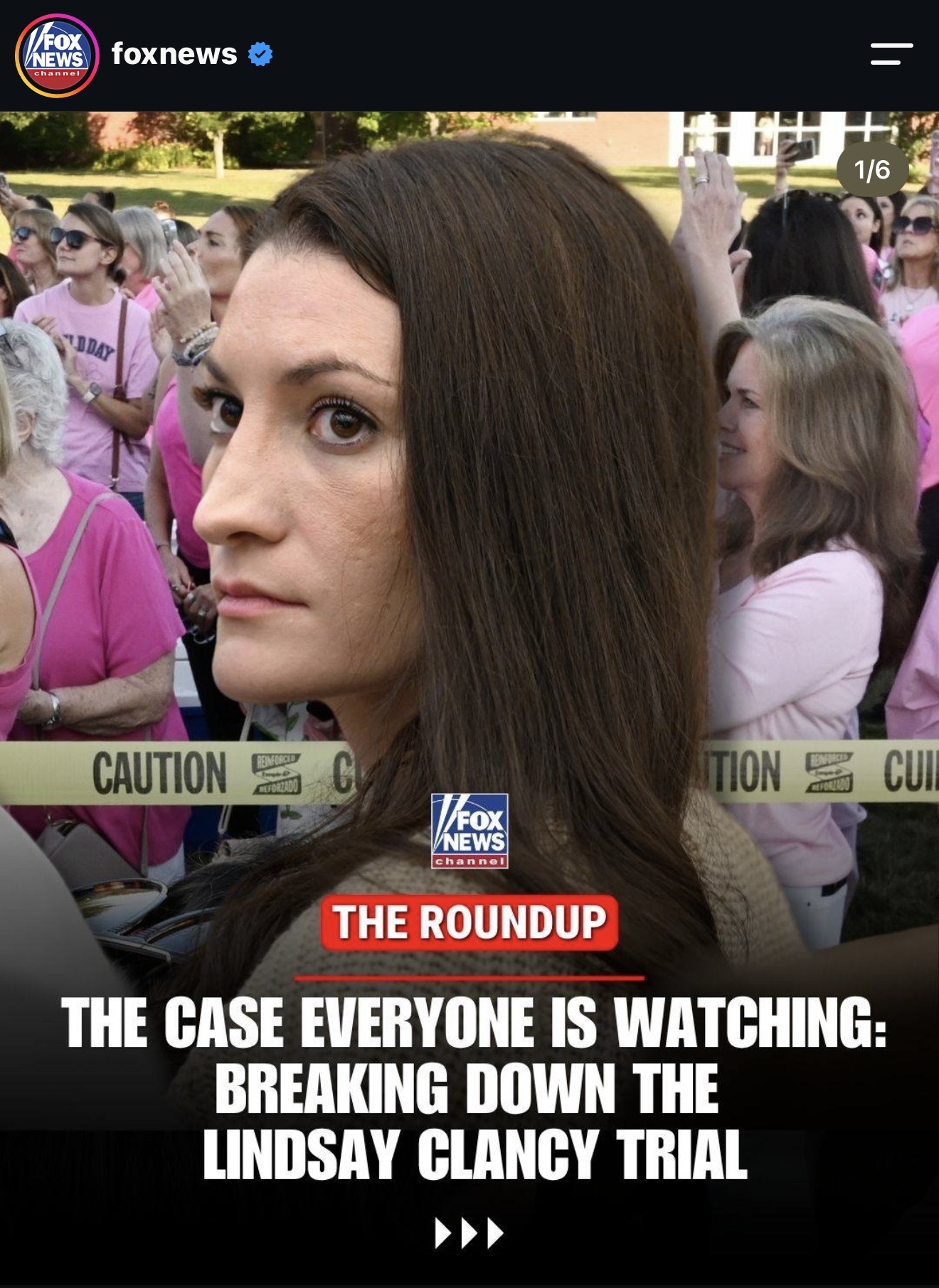
6:30 p.m.: I saw another Instagram post from Fox News about the Lindsay Clancy trial. The post described the case as “the case everyone is watching” and promoted a breakdown of the trial. Unlike some of the other posts, this one is legitimate. Lindsay Clancy is currently on trial in Massachusetts in connection with the deaths of her three children, and the trial was still ongoing when I saw the post.
However, I noticed that the presentation was far more dramatic than a straightforward news report. The large text, dramatic image, and phrase “the case everyone is watching” are designed to grab attention. This does not necessarily make the information false, but it reminded me that misinformation is not the only problem with digital media. Even accurate information can be presented in a way that encourages an emotional reaction rather than careful consideration. There has also been significant speculation and conspiracy content surrounding the Clancy trial on social media, making it even more important to distinguish reporting from commentary and speculation.
7:00 p.m.: I returned to Instagram and saw the Zendaya pregnancy post again. I decided to fact-check it rather than assume it was true just because it had been shared so widely. I found reports that the viral “baby bump” image had been digitally altered using AI. The original photograph, taken in 2023, did not show Zendaya with a baby bump. Zendaya and Tom Holland have also not officially confirmed that they are expecting a child.
This was probably the clearest example of misinformation I encountered that day because the image itself was being used as evidence. Someone could easily look at the photograph and think, “Well, there is a picture, so it must be true.” In reality, the image had been manipulated.
8:30 p.m.: Instagram/Facebook, mostly lifestyle content, funny videos, pets, and celebrity content.
11:45 p.m.: Scrolled Instagram in bed; mostly memes, relationship content, and funny videos.
8:30 a.m. (Morning of 25th): Checked Instagram after waking up, along with text messages and email.
Reflection
I expected to encounter some questionable content during this activity, but I was surprised by how easily it blended in with everything else I was consuming. I did not have to search for misinformation. It appeared naturally in my Instagram feed alongside harmless videos. I also noticed that questionable content tended to focus on subjects that already generate strong emotions, especially celebrities, crime, and controversial court cases.
Another pattern I noticed was that not all questionable content was entirely fabricated. The Hayden Panettiere post, for example, included several details supported by legitimate reporting but combined them with unsubstantiated speculation and implications. The Lindsay Clancy post was based on a real trial, but its dramatic presentation encouraged a more emotional response. The Zendaya post was more straightforwardly misleading because the image itself had been manipulated.
This activity made me realize that fact-checking is not only about asking whether something is “real” or “fake.” Sometimes the better question is: What part of this claim can be verified? Going forward, I think I will definitely take the time to pause before sharing posts about celebrities, crime, or breaking news, especially when they use dramatic language or make serious claims without linking to an original source. The biggest lesson for me was that misinformation does not always look obviously fake. Sometimes it looks like a normal Instagram post with a convincing picture and thousands of people already believing it.
———————————————————————————-
August 20th, 2026
02.15.26
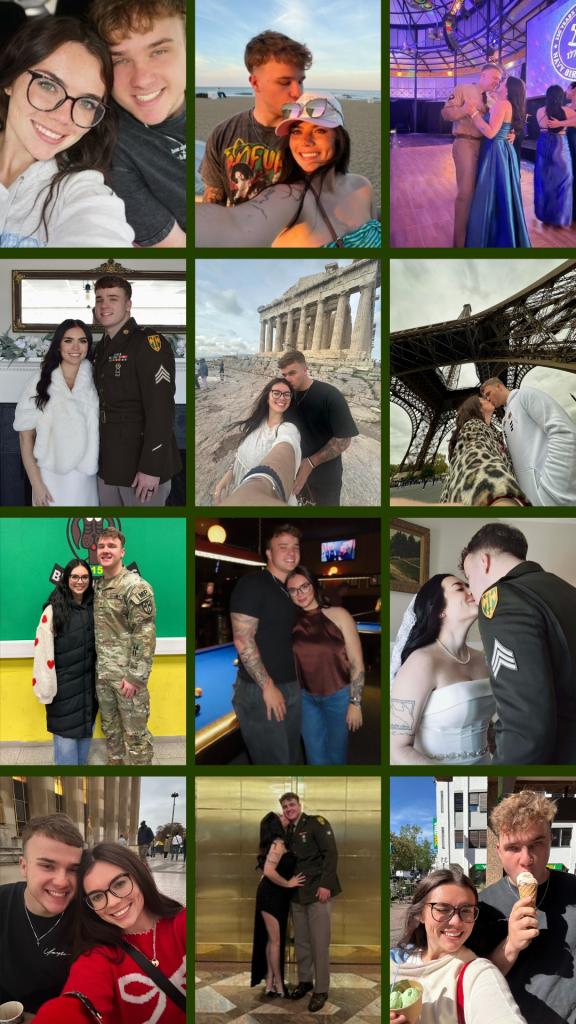
I couldn’t launch my blog without showing off the most important person in my life, my husband, Camren. We got married at The Lucerne Inn in Maine on February 15th, 2026. It was just my mom and dad there, and I wouldn’t have had it any other way. I could speak for hours about how incredibly smart, dedicated, kind, and considerate he is.
———————————————————————————-
August 19th, 2026
Hello There! As my first post, I thought I’d introduce myself :)
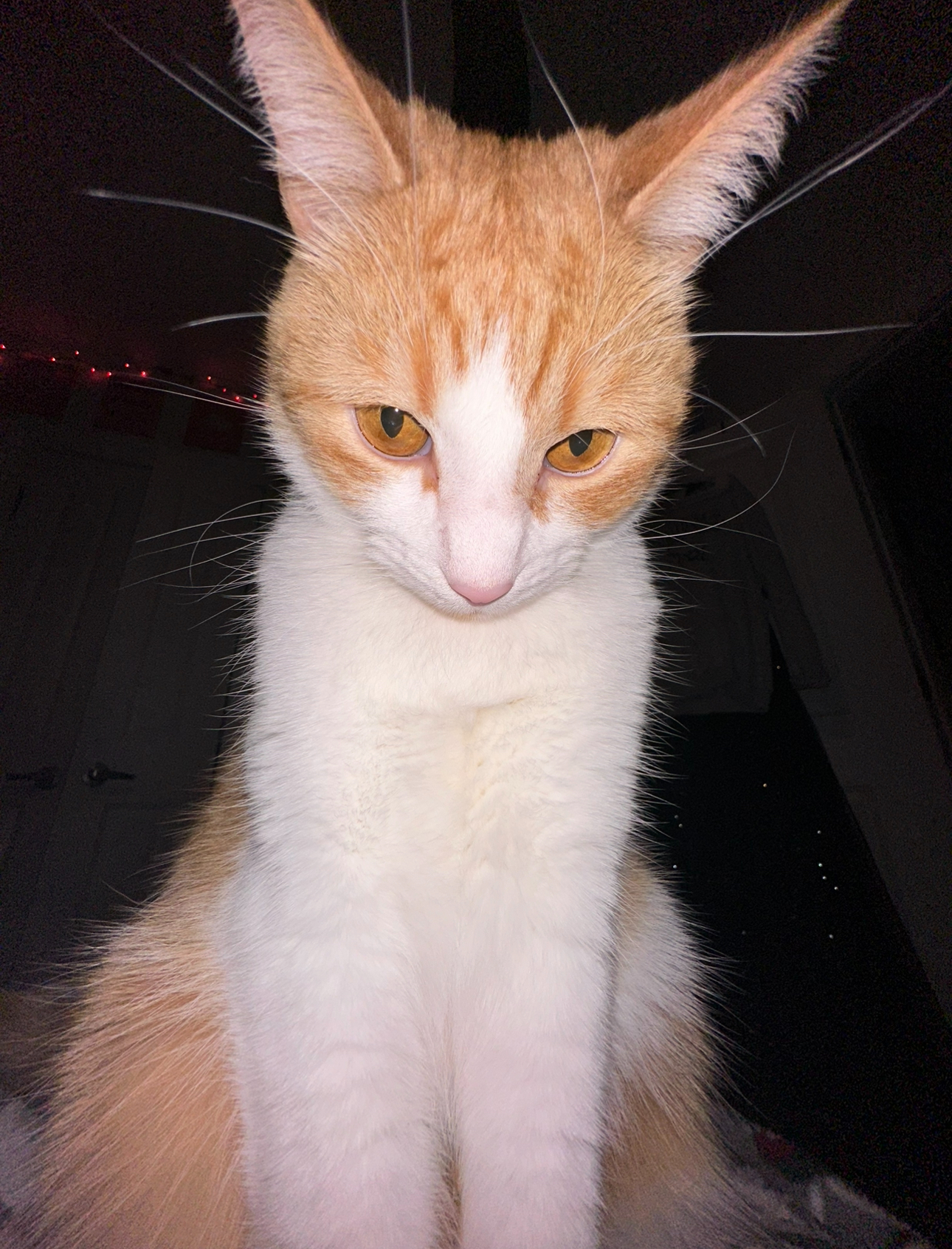
My name is Delaney (but I normally go by Laney), and I was born and raised in Brewer, Maine. I have served in the U.S. Navy for 7 1/2 years and am currently deployed in Germany. I am married to the love of my life, Camren, who serves in the Army (yuck) and is currently stationed in New York. Our son, Dan, is my absolute pride and joy (photo included below), and while I’m deployed over here, he’s living with my mom on the lake in Maine! Thank you for visiting my blog, and I can’t wait to share what’s next!

A little salty & a lot of fun!
I’m Laney! Navy sailor, college student, wife, and devoted cat mom—just trying to keep up with life and wherever the Navy decides to send me this week.

